
Health & Safety Policy for Gardening Golders Green
Gardening Golders Green is committed to maintaining the highest standards of health and safety across all garden maintenance, landscaping and horticultural services. This policy sets out our approach to risk management, safe working practices and continuous improvement for gardening in Golders Green and surrounding service areas. We recognise that the wellbeing of staff, clients and the public is central to delivering reliable garden services.Statement of intent
Our aim is to prevent injury, ill health and environmental harm by embedding a culture of safety into every job. All employees and contractors must follow this policy and the associated procedures. Compliance with relevant health and safety standards and reasonable industry practice is mandatory, and we will take proportionate action to ensure adherence.
Scope and service area
This policy applies to all activities carried out by the Golders Green gardening team, including scheduled maintenance, pruning, turf care, planting, hard landscaping and seasonal projects. While the policy is tailored for our service area, it remains broadly applicable to comparable urban and suburban garden operations and is intended as an operational safety framework rather than a legal document.Risk assessment and control measures
We carry out documented risk assessments for routine tasks and one-off projects. Assessments identify hazards, evaluate likelihood and severity, and define control measures to reduce risk to an acceptable level. Controls include:
- Eliminating unnecessary hazards where possible
- Substituting safer equipment or materials
- Providing appropriate personal protective equipment (PPE)
- Implementing administrative controls, such as safe systems of work
- Training and supervision to ensure competence
Incident reporting and emergency response
All incidents, near misses and property damage must be reported promptly. An incident log is maintained and reviewed at regular intervals to identify trends. Emergency procedures, including first aid and fire response, are in place and communicated to workers. Where appropriate we will liaise with emergency services and comply with any lawful requests.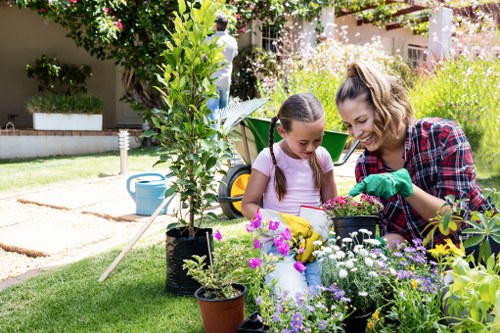
Equipment, PPE and safe working practices
Tools and mechanical equipment are inspected before use and maintained according to manufacturer recommendations. Operators of powered tools are required to hold appropriate training and use PPE such as eye protection, gloves, hearing protection and protective footwear. Equipment that is deemed unsafe is removed from service immediately and tagged for repair.Chemicals, fuels and waste handling
The use of pesticides, herbicides and fertilizers is controlled, recorded and only undertaken by authorised staff using safe dilution and application methods. Fuel is stored in secure containers, away from ignition sources. Waste is segregated and disposed of responsibly, and when possible we favour recycling and composting to reduce environmental impact.Working near the public and traffic
When work is carried out in public-facing locations the team uses signage, barriers and high-visibility clothing to protect passersby. Jobs near roads or footpaths are planned with traffic management measures proportionate to the risk, and staff are briefed on pedestrian safety and courtesy. Maintaining a tidy work area reduces trip hazards and public exposure to tools and debris.Training, competence and supervision
We invest in ongoing training so that every gardener understands safe methods for pruning, lifting, use of machinery and chemical handling. New starters receive an induction that covers this policy and on-site safety rules. Supervision ensures that procedures are followed and that less experienced workers are supported while gaining competence.
Contractors, subcontractors and monitoring
Contractors engaged to work alongside our teams must demonstrate adequate health and safety arrangements and comply with our standards while on site. We monitor performance through site checks and periodic audits, and corrective actions are taken where deficiencies are identified. Records of inspections, maintenance and audits are retained to support continual improvement.