Recycling and Sustainability at Gardening Golders Green
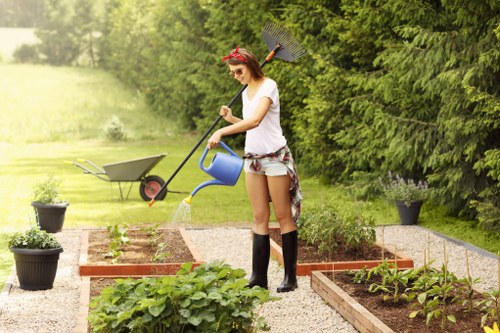 Welcome to Gardening Golders Green — your local hub for eco-conscious gardening and a model eco-friendly waste disposal area. Our approach to recycling and sustainability focuses on reducing landfill, boosting reuse, and creating a sustainable rubbish gardening area where green waste becomes valuable resources for community soil and plant health. We combine practical on-site systems with neighbourhood collaboration to make composting, separation and low-carbon collection the norm across the gardens and adjacent streets.
Our strategy aligns with the wider boroughs' approach to waste separation: clear streams for food waste, garden/green waste, mixed dry recycling and residual rubbish help increase diversion rates from landfill. We promote greater source separation at point of use within beds and allotments, and we encourage members to use labelled sacks and bins to support the local transfer chain. This page outlines our targets, local transfer stations we coordinate with, charity partnerships for reuse, and the shift to low-carbon vans for collections.
 We have set a measurable recycling percentage target for Gardening Golders Green: to achieve a 65% recycling and composting rate across all garden-origin waste streams within five years. This target covers garden cuttings, soil, pots, used compost, and associated packaging from plant supplies. Meeting it will require coordinated separation at source, reliable transfer links to borough facilities, and consistent reporting on progress.
Our local transfer stations play a central role in turning garden waste into usable materials. We work closely with nearby borough transfer facilities and Household Waste Recycling Centres (HWRCs) that service the NW London area to ensure green waste is taken to accredited composting sites. Typical local partners include borough transfer yards and community-scale composting hubs that accept source-separated green waste and process it into quality soil improvers.
 Partnerships with charities and community organisations are integral to our reuse-first approach. We collaborate with local volunteer groups, charities that accept reclaimed timber, pots and tools, and social enterprises that run reuse shops for surplus garden equipment. These partnerships help us divert usable items from the waste stream and provide low-cost materials to gardeners in need. We also support educational programmes that teach reuse, upcycling of planters and seed-saving, and on-site compost literacy.
To reduce transport emissions, Gardening Golders Green is upgrading its collection fleet: a phased move to low-carbon vans — electric and hybrid vehicles where feasible, and ultra-low-emission models for heavier loads — will support eco-friendly waste collection runs from the gardens to transfer stations. This fleet transition lowers our carbon footprint and demonstrates how a sustainable rubbish gardening area can function with modern, clean logistics.
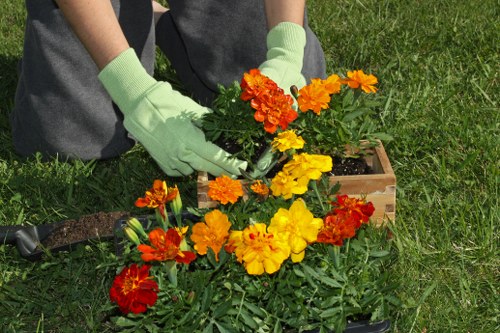
Practical Recycling Activities and On-Site Systems
On site we operate clear systems for sorting and storing materials prior to transfer: dedicated bays for green waste, sheltered crates for dry recyclables (paper, card, plastics compliant with borough rules), and sealed containers for food waste where available. Our community compost bays convert garden cuttings and kitchen vegetable waste into useful compost; we also run seasonal chipping for larger woody material to produce mulch. Below is a quick list of recyclable items specific to our gardening area:
- Garden cuttings and leaves — separated as green waste for composting
- Food scraps and uncooked peelings — collected for anaerobic or in-vessel composting (check borough collection specifics)
- Plastic plant pots and seed trays — sorted by type for local recycling or reuse schemes
- Broken tools and metal stakes — diverted to scrap or repair partners
- Cardboard and plant packaging — flattened and included in dry recycling where accepted
These activities support the broader municipal model where boroughs encourage source-separated recycling and provide guidance on which materials go into each stream. By matching our on-site practice to that model, we ensure minimal contamination and maximize the proportion of material that becomes compost, mulch or recycled goods.
Sustainable Rubbish Gardening Area Operations
Our operations emphasise low-impact workflows: scheduled collections with low-carbon vans, compacting and baling of dry recyclables where appropriate, and regular transfer to accredited composting facilities. Signage, volunteer stewards and monthly audits help keep contamination rates down. We also conduct periodic spot-checks and use simple metrics to monitor our diversion and recycling percentage target so progress is transparent to the community.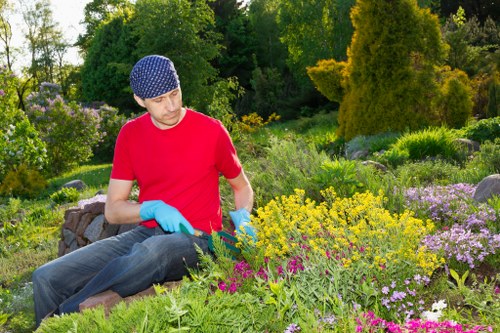 Monitoring and community engagement are key to success. We publish an annual report on waste flows within the gardens, explaining how much green waste was composted, how many items were passed to partner charities, and the carbon reduction achieved by our low-emission collection runs. These reports inform practical adjustments: expanding compost bays, adding clearer labelling, or scaling our low-carbon vehicle use during peak seasons like spring and autumn.
In summary, Gardening Golders Green demonstrates how a neighbourhood can create an effective eco-friendly waste disposal area and a thriving sustainable rubbish gardening area without compromising plant health or community access. By targeting at least a 65% recycling and composting rate, partnering with borough transfer stations and local charities, and switching to low-carbon vans, we turn garden waste into an asset: cleaner neighbourhoods, healthier soils and a lower-carbon future for our green spaces.